ROMAN ROUTE
We are about to start a journey through time, and land in Roman territory, where we can imagine life as it developed at that time.


We can remember the gladiator fights in the Amphitheater or the chariot races in the Circus…
Walking through the historic center of Tarragona, we will better understand the imperial city of Tarraco, then we will go forward in time to enter the Medieval Age, and then return to enjoy the city of the s. XXI.
ROMAN ROUTE and Tarragona
CONSTANTÍ CENTCELLES
We start this route in the town of Constantí, located between Reus and Tarragona. In the center of the town we can see the parish church of Sant Feliu, neoclassical in style (18th century) and built on top of the old castle.
But the most important visit is on the outskirts of Constantí, we are talking about Centcelles building erected in the s. IV. Some of its rooms were used as Mosaic Workshops, while others were converted into Mausoleums. In that room you can see a dome that has paintings and mosaics with hunting scenes from the Old and New Testaments.
FERRERES BRIDGE
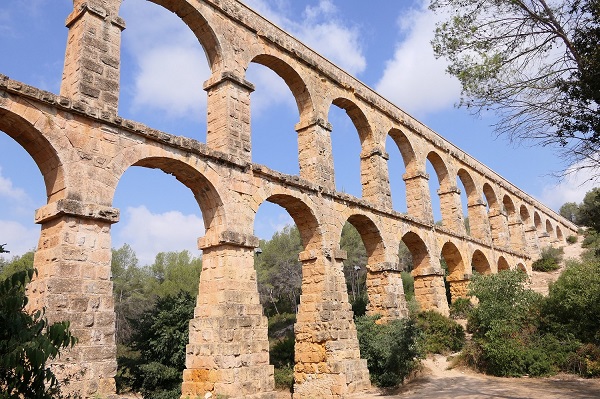
After the visit we will go to the Puente de les Ferreres: Roman aqueduct built in the s. I BC. It is made up of two rows of superimposed arcades. Its maximum height is 27 meters and its total length is 217 meters. The width of the arches is 6 meters.
The upper channel that carried the water has been preserved thanks to the restorations carried out in medieval and modern times.
It is popularly known as the Pont del Diable.
Once we have seen the aqueduct, we will head towards the sea, towards Tarragona, capital of the region (Tarragonés) and the province. Of Roman foundation, its monumental ensemble has been declared a UNESCO World Heritage Site.
Its importance lies in the number and size of the buildings from that time: CIRCUS, THEATRE, AMPHITHEATER, WALLS, FORUMS…
The old city, called Part Alta, partly follows the Roman layout and is included within the Walls.
The entire old town is possessed of great beauty, the Cathedral of Sta. María being a highlight, a transitional building from Romanesque to Gothic (12th to 14th centuries) that dominates the city from the site of the old Roman temple.
Tarragona has a great commercial activity centered around the main axis of the city that is the Rambla Nova. This leads us to the Balcó del Mediterráneo Viewpoint, which extends with Passeig de les Palmeres, from where spectacular views of the sea can be seen.
If we continue descending we will arrive at the neighborhood of Port El Serrallo, this is a fishermen’s neighborhood created in the middle of the s. XIX. The Church of St. Pere (1878) in neo-Gothic style stands out. In the Serrallo, we can enjoy a wide gastronomic variety based on seafood and fish.
BUILDINGS OF ROMAN INTEREST
AMPHITHEATER
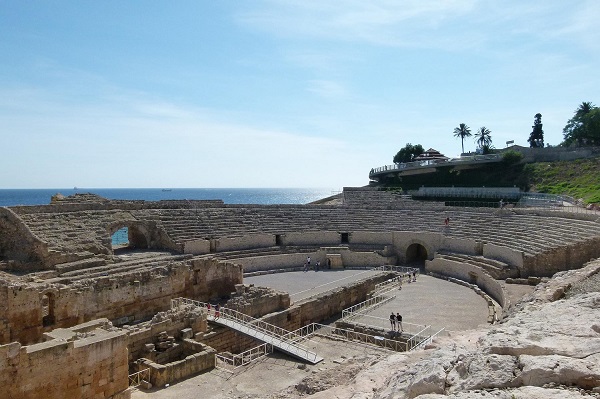
Built in the s. II AD outside the walled area, next to the sea with an elliptical layout; Gladiator and animal fights were held there. A Paleo-Christian basilica from the s. VI to which the remains of the Romanesque church of Sta. María del Miracle (12th century) have been superimposed.
CIRCUS
Built between 81 and 96 AD. It is one of the best preserved of the Roman Empire. Beam races, chariots and other shows were held. Its plan is rectangular with rounded ends. It measured about 325 meters long and between 100 and 115 meters wide.
WALLS
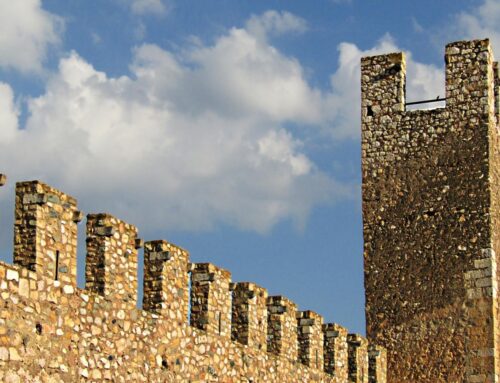
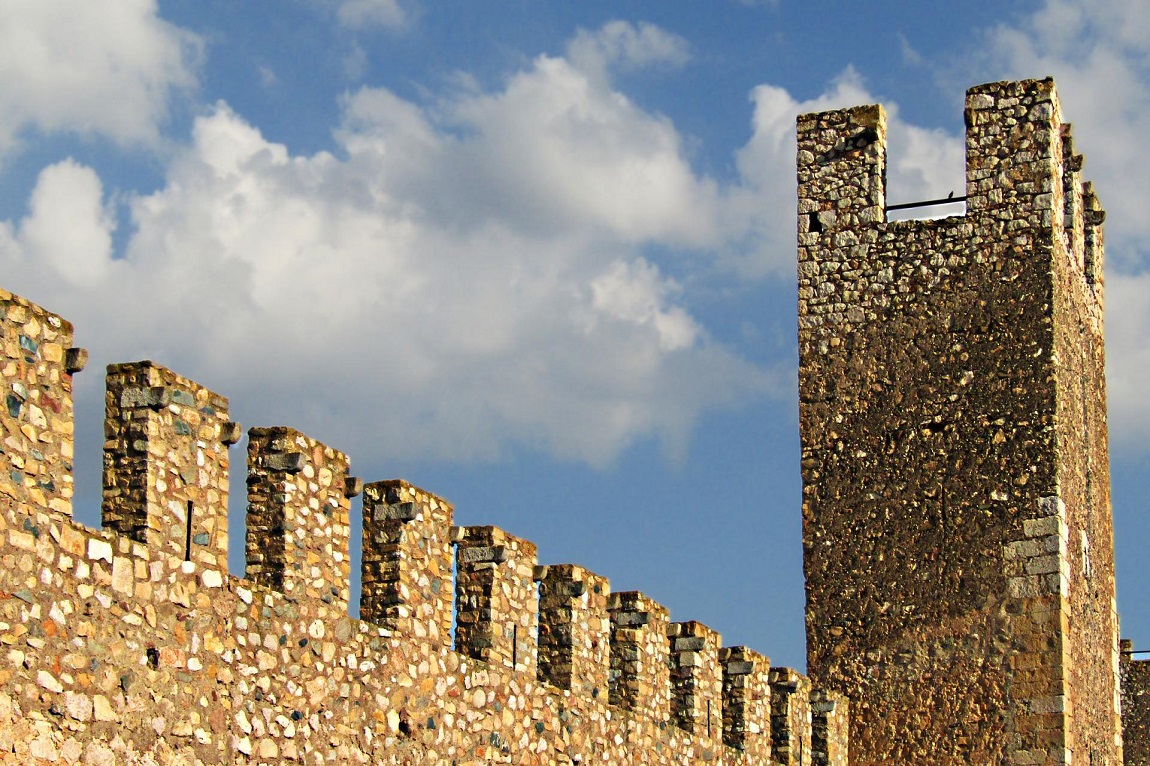
They surround the old nucleus; at some points it reaches 12 m in height, and more than 1 km of its layout is preserved. It was raised throughout the s. II BC

EARLY CHRISTIAN NECROPOLIS
Discovered in 1928. It is the best considered on the peninsula, in whose museum remains of tombs and funerary art from the 4th to 6th centuries can be seen.
PRETORIO OR CASTLE OF THE KING (OR PILAT)
It is actually one of the Roman towers that flanked the Provincial Forum (1st century BC) converted into a royal castle in medieval times. Spectacular views from its terrace.
PROVINCIAL FORUM SQUARE
Formed by two terraces (levels) from the s. I AD The upper one had the place of worship, where the Cathedral was built. The lower one had administrative functions. Since the 12th century it has been occupied by the current old town.
THEATER
Five of the lower tiers, part of the orchestra and the stage are currently preserved. Magnificent statues and fragments of rich architectural decoration have been recovered. It is dated at the end of the s. I BC
ARCHAEOLOGICAL WALK
Located between the Roman walls and the counter wall (18th century).
LOCAL FORUM
Here the political, social and economic life of Tarraco took place. You can see the remains of a three-nave basilica built in the time of Emperor Augustus.
NATIONAL ARCHEOLOGICAL MUSEUM
Architectural, sculptural and ornamental materials from Roman Tarraco are exhibited.
OTHER BUILDINGS
CATHEDRAL OF ST. MARIA
Transition building from Romanesque to Gothic with three naves. Its construction began in 1171, consecrated in 1331. Its square-plan cloister is Romanesque in structure up to the arches of the porticoes and Gothic from there.
Inside you can admire the main altarpiece, the chapel of the Tailors and the Santísimo Sacramento, the sepulcher of San Juan de Aragón…
RAMBLA NOVA
It was created at the end of the s. XIX and in it there are the best eighteenth-century and modernist buildings in the city.

DIOCESAN MUSEUM
Pieces of liturgical art and an important set of tapestries from the s can be found in the museum. XV to XVIII.
To highlight, the collection of Roman archaeology, the collection of Hispano-Arabic pieces, the collection of liturgical gold and silver work and the Gothic art gallery.
It is accessed through the cloister of the Cathedral.
CASTELLARNAU HOUSE MUSEUM
It contains the Molas collection, made up of archaeological and ethnographic pieces, which cover a period that goes from prehistory to the modern age. The Molas collection also has a collection of weapons and another of numismatics.
The Museum has other collections, such as that of Sánchez Camargo, which includes a collection of paintings, drawings and engravings from the beginning of the Franco regime to the end of the 1960s.
Also noteworthy is a painting by Salvador Dalí, a model of the first plane that flew over Tarragona in 1913 and a set of coins.
Casa Castellarnau was built at the beginning of the s. XV and housed Carlos I in 1542 during his stay in Tarragona. Inside, the house preserves structures from various periods.
ROMAN ROUTE AND THE NORTH COASTS OF TARRAGONA
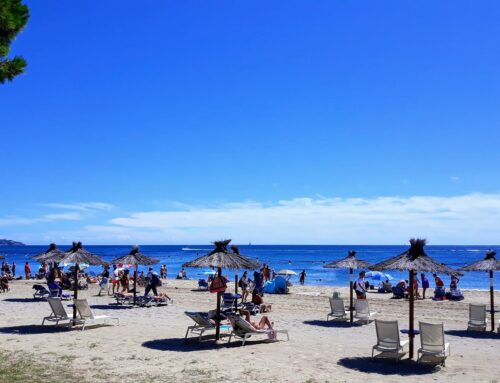
Following this itinerary we will travel back in time to Roman times to admire the different monuments that this civilization left us and that denote the great importance that this culture had in the ancient province of Tarraconensis. At the same time, we will contemplate the wonderful beaches that have shaped the Costa Daurada.
We will also visit other towns that have exponents of other times and cultures that are closer to us in time but no less fascinating for that.
THE TOWER OF THE ESCIPIONS
Leaving Tarragona on the N-340, we will find the starting point for this route: La Torre del Escipions. It is a Roman funerary monument dating from the beginning of the s. I. It is of the torriform type, built with calcareous stone, possibly extracted from the neighboring Médol quarry. The tower is located next to the Via Augusta, an old Roman road and is the longest in the entire Iberian Peninsula. They are preserved 9 meters high and consists of three bodies, the two lower solid.
In one of its facades there are two funerary reliefs that represent Attis (Phrygian god), in the third body (empty inside) there are two heads in low relief quite blurred, they are supposed to represent the characters that lie here.
ROMAN QUARRY OF THE MEDOL
We can also visit the Roman Quarry of Médol. The vast majority of the buildings in Tarraco were built from the 50,000 m3 of calcareous stone extracted from it.
An element to highlight is a slender obelisk known as L`agulla del Médol. It has a height of 16 meters and marks the starting point of the extraction.

SANDY BEACHES THAT HAVE GIVEN FAME TO THE COSTA DAURADA
TAMARIT
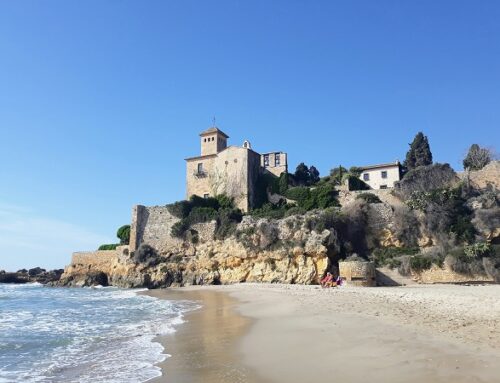
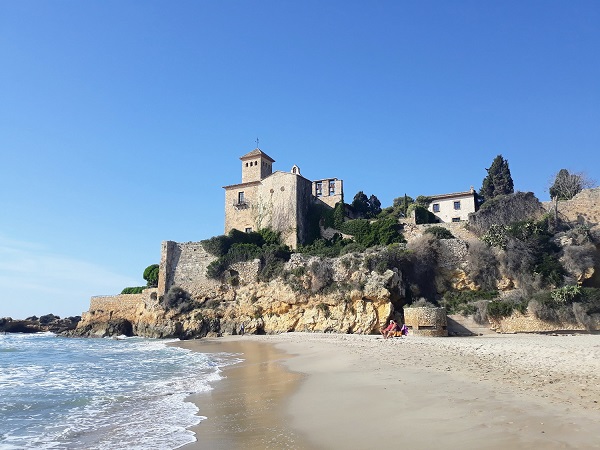
Descending towards the sea we will see the Castle of Tamarit (11th century), one of the few castles that are reflected on the sea.
It was remodeled at the beginning of the s. XX based on medieval towers and fortifications. In its surroundings, the Tamarit Protected Area conserves a significant number of junipers and white pines.
ALTAFULLA
We will find a beautiful medieval complex declared a historical-artistic complex, made up of the Castle of Montserrat (11th century, with 17th century interior), the Church of St. Martí (neoclassical 18th century), and 3 porticoes.
Next to the sea we can walk along its Paseo Marítimo. Especially noteworthy is the Great Roman Villa dels Munts, an authentic palace that belonged to the high officials of the city of Tarraco.
TORREDEMBARRA
It is another fishing and tourist town. It has an interesting old quarter in which the Renaissance castle of the Icart (16th century) stands out, the only new civil building of the Catalan Renaissance that currently exists in Catalonia.
The Church of St. Pere is neoclassical and inside there is a Baroque organ restored in 1705. Of the walls, the Torre de la vila and the portals of La Bassa and Los Padrinos are preserved. Both have been restored.
We can also find Remains of Roman settlements in Partida del Moro and Roca Foradada.
CREIXELL
In Creixell we can admire the remains of a castle, with walls and defense towers. Also noteworthy is the modernist bell tower of the Church of St. Jaume, built by the architect Jujol, inside which there are mural paintings from the 16th century. XVII.
On the beaches of Creixell dunes can be seen due to the wind.
Other points of interest in this town are:
More Gilbert. gothic arches
Mas Mercader (early 18th century). Inside we find the chapel of Sta. Teresa (classicist style), frescoes and caves.
BERÀ ARCH
On the same N-340 road we can see the ARC DE BERÀ. It is located within the old layout of the Via Augusta and it is an honorary arch whose construction probably served to delimit the territory of ancient Tarraco.
Following the route and entering the region of Baix Penedès, we can walk or bathe in the beaches of Comaruga and Sant Salvador.
ROC DE SANT GAIETÀ
It is a different little town that surprises the visitor for the mixture of architectural styles, for the tranquility of its interior and the beauty of its buildings. It is a welcoming and very endearing visit.
CALAFELL
In its old quarter stands the Castle, the Church of Sta. Creu and the Casas Indianas. On Calafell beach is the maritime district. Here you can visit Casa Barral, the Roman Villa of Mas Vilarenc and an archaeological site of great interest, La Ciutadella Ibérica, which has been completely rebuilt and shows us the life of the Iberians before the arrival of the Romans in these latitudes.
VENDRELL
Capital of the Baix Penedés region, it has to its credit the Pau Casals House-Museum, dedicated to this brilliant musician.
Considered an important cultural and commercial center, its municipal term extends to the coast where the tourist centers of Sant-Salvador, Coma-ruga and Françàs are located.
El Vendrell offers us a varied cultural and tourist sample. The neoclassical-style Church of St. Salvador (18th century), with its octagonal bell tower crowned by the angel Tobies, has become a symbol of El Vendrell. The temple was destroyed in 1936 and the architect Jujol restored it. It houses a baroque organ of great value inside. The Portal del Prado is the only vestige of the old walls.
CASTELLET I LA GORNAL
The municipality has the peculiarity of being built by several urban nuclei. The town of Castellet forms an endearing postcard, especially for two reasons: the meander of the River Foix that surrounds it and the majestic Castle (10th century) that crowns the medieval nucleus. Another point of interest in the same town is the parish church of St. Pere (Romanesque, 12th century).
Once outside the urban area, we can head towards the Foix reservoir lock, which is a pleasant walk, especially when it is open.
In the urban center of Ciariana we can visit the temple of the Mare de Déu de Montserrat (1973), of very original construction, and the Pagés Tool Museum.
In Les Masuques is the Romanesque Church of St. Esteve de Can LLopart and the Sanctuary of Sta. María de Montanyans.
L’ARBOÇ
This small town holds many surprises for the visitor who walks through its streets. A good point to start the visit is Carrer Major, and where we can see the sculpture of Christopher Columbus; It is a replica of the statue of Columbus in Barcelona acquired from Josep Gener i Batet for the universal exhibition of 1888.
Continuing our walk along Carrer Major we will be able to verify that well-differentiated architectural styles are mixed, with some modernist facades especially standing out.
The town suffered 3 major fires in the past (1464-1818-1836), in which part of the buildings of medieval origin were lost.
Other points of interest are:
Church of St. Julià, also known as the Penedés Cathedral, due to its impressive dimensions, was built between 1631 and 1647. In the Capella del Dolors, there are Franco-Gothic paintings of great iconographic value.
Palau Gener i Batet: impressive construction of the s. XIX.
La Giralda: neo-Arabic style building, built between 1898-1906, by Joan Roquer i Marí. Apart from the reproduction of the Giralda in Seville, it also houses reproductions of the Patio de los Leones and the Sala de los Embajadores in the Alhambra in Granada.
Puntes al Cixí Museum: complete collection of bobbin lace
El Cau del Tauró: The most important museum in Europe on the world of sharks.