CISTERCIAN ROUTE
The Cistercian route links the three most emblematic Cistercian monasteries in Catalonia.


The birth of the Cistercian order (XI century), is due to the rejection of wealth and the high standard of living enjoyed by some monasteries. From the figure of St. Bernat del Claravall, the monastic order of the Cistercians spread throughout Europe.
SANT CREUS MONASTERY
The Santes Creus monastery is located in the Alt Camp region. The creation of the monastery dates back to the s. XII, when the nobles of Montcada donated land in Valldaura (Cerdanyola del Vallès) to the Gran Selva abbey for the foundation of a subsidiary. But the monks, lovers of retired luggers, did not adapt to the place and looked for a secluded corner. They moved to Santes Creus, where in 1158 they began the construction of the monastery.
Santes Creus is the only uninhabited monastery on the Cistercian route and, like the one in Poblet, it is located in an area of abundant water and rich in vegetation, on the banks of the river Gaià.
The monastic enclosure is accessed through the l`Assumpta portal, which leads to the Plaça de St. Bernat Calvó, where the Abbot’s Palace is located, which contains a small cloister. From here you can see the church (12th-13th centuries). Its interior has three naves and houses the porphyry tomb of Pere el Gran, that of Jaume II and Blanca d’Anjou, and that of Admiral Roger de Llúria.
The most notable parts of the monastery are the cloister (14th century) and the beautiful chapter house, ordered to be built by Jaume II and Blanca d’Anjou.
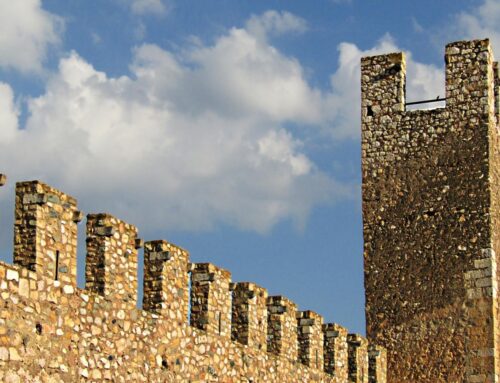
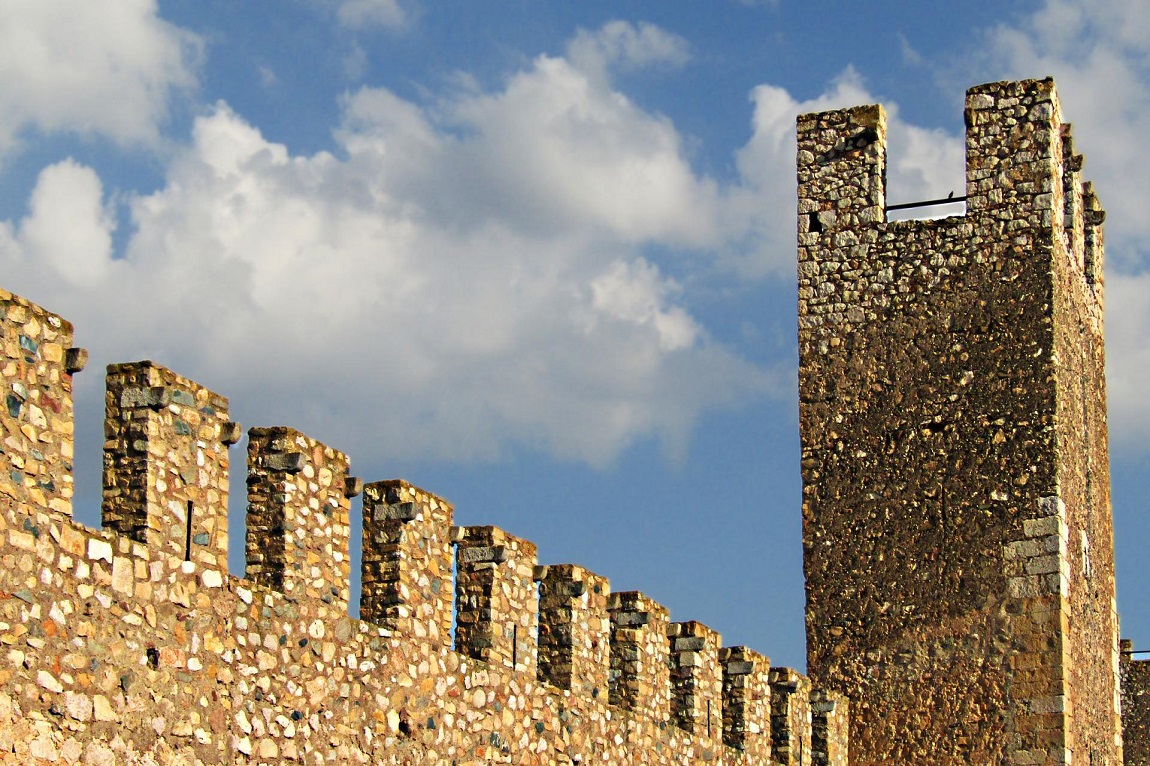
When visiting Santes Creus we cannot forget that it is a fortified monastery, with walls and battlements, a military imposition by Pere III El Cerimoniós.
Also noteworthy are the Classical Music Concerts that take place in the summer in the monastery complex.
It is accessed through the cloister of the Cathedral.
CASTELLARNAU HOUSE MUSEUM
It contains the Molas collection, made up of archaeological and ethnographic pieces, which cover a period that goes from prehistory to the modern age. The Molas collection also has a collection of weapons and another of numismatics.
The Museum has other collections, such as that of Sánchez Camargo, which includes a collection of paintings, drawings and engravings from the beginning of the Franco regime to the end of the 1960s.
Also noteworthy is a painting by Salvador Dalí, a model of the first plane that flew over Tarragona in 1913 and a set of coins.
Casa Castellarnau was built at the beginning of the s. XV and housed Carlos I in 1542 during his stay in Tarragona. Inside, the house preserves structures from various periods.
POBLET MONASTERY
On the way to Poblet it is interesting to go to Pla de Santa María, where the restored Church of St. Ramón, in Romanesque style, is preserved and where the influence of the Cistercians can be appreciated.
Poblet is the largest inhabited Cistercian monastery in Europe. In 1991 it was declared a World Heritage Site by UNESCO. It should not be surprising, then, the impressive set of buildings that we can admire after crossing the Porta de Prades and the Porta Daurada.
Its origin dates back to the donation by Ramón Berenguer IV to the Cistercian monastery of Fronfreda (1150) of the lands that were his heritage until 1835.
Inside we can see the Church (12th-13th centuries), austere as befits Cistercian Gothic. The alabaster altarpiece stands out, the work of Damià Forment (1529).
The great cloister is a magnificent example of the transition from Romanesque to Gothic (three wings), with large windows and beautiful lacework.
In the transept is the set of royal tombs, where the remains of the kings of the Catalonia-Aragó crown are found. Of the monastery we can highlight the Palau Reial, the chapter house, the Royal Chambers and the library.
Next to the monastery is the Bosc de Poblet, which is part of the Natural Area of National Interest in which multiple activities related to nature are offered
VALLBONA DE LES MONGES MONASTERY
The Vallbona de les Monges monastery is believed to have been founded in 1153, although it was in 1176 when it became part of the Cistercian order.
It is the only female monastery and the only one that has been continuously inhabited for more than 800 years (except during wartime).
The importance of women in medieval times is contemplated here. This must be the reason why the monastery has a special beauty, more delicate. It was declared a historic-artistic monument in 1931.
If we start our visit through the cloister we can see that it is shaped like a trapezoid, a fact that makes it different from the others. The galleries of the cloister show us that they were built at different times, from Romanesque to Gothic.
The chapter house is a clear exponent of Cistercian life. In it we find the coats of arms of the Catalan nobility carved on the tombs.