MODERNIST ROUTE
The modernist era begins in 1880 and extends until 1925.
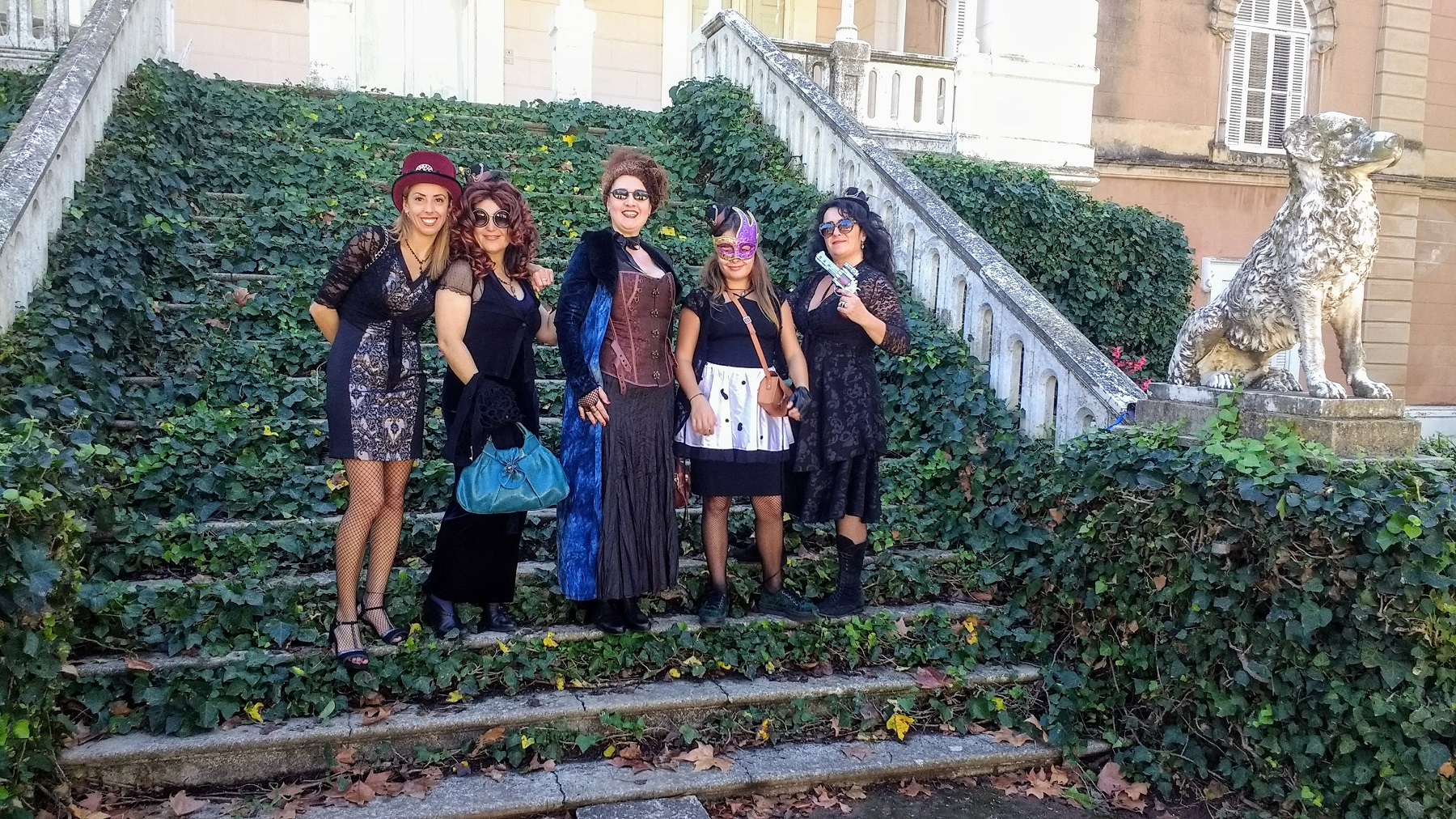

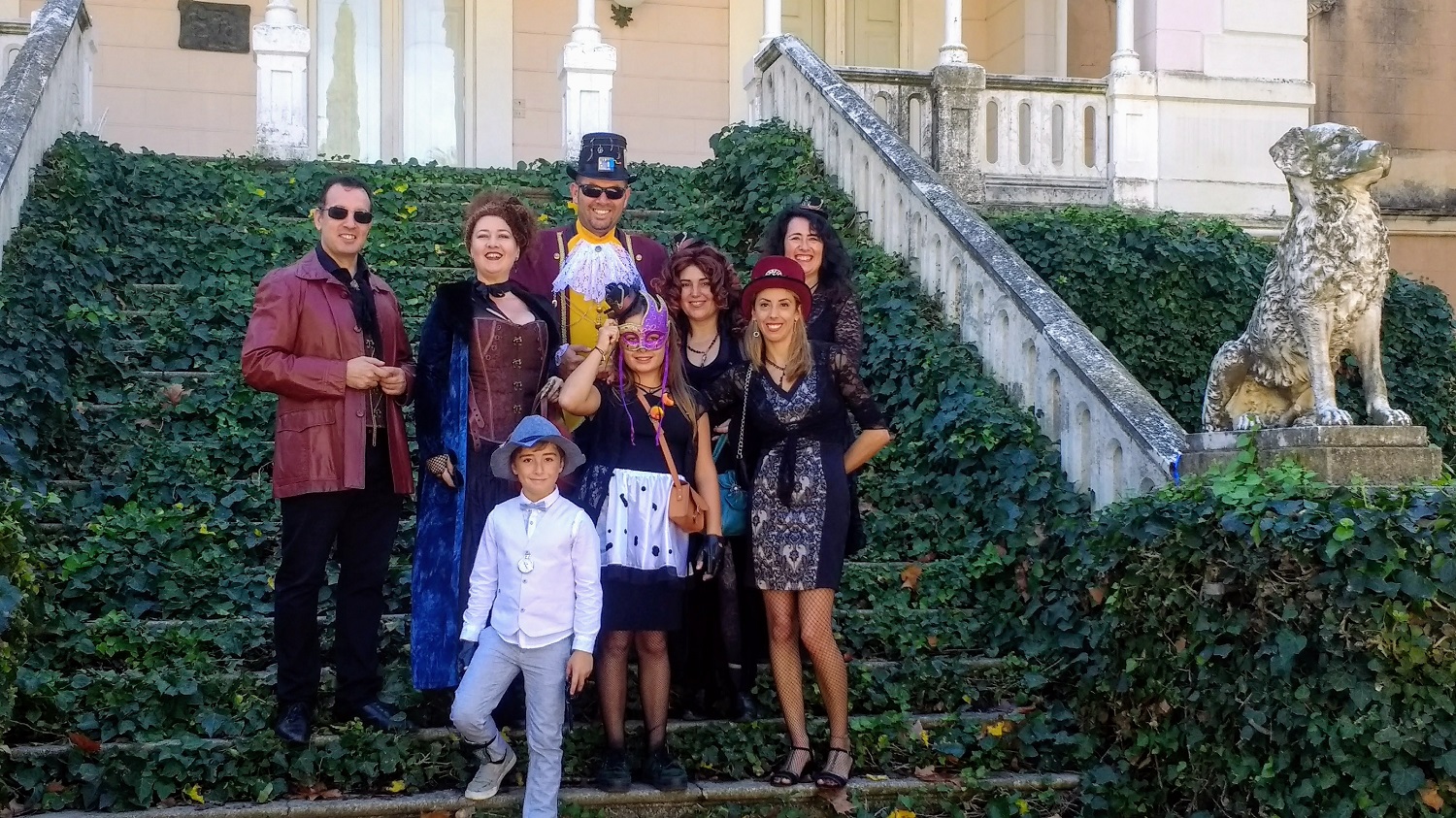
It is definitely a time that takes us to distant places and times.
The modernist aesthetic stands out for its exquisite elegance, for its exoticism, for its legendary evocations, for its love of nature…
PARC SAMÁ
The PARC SAMÁ is located between the municipalities of Cambrils, Montbrió del Camp and Vinyols i els Arcs and 5 km from the coast.
It was built in 1882 by the Marquis of Mariano who commissioned José Fonseré i Mestres to design the garden.
The park occupies an area of 14 hectares and is famous for its gardens, an artificial Lake-Pond, the Waterfall, the Angulo Tower and a palace that is currently not open to visitors.
At the end of your visit to the park, we recommend you visit the town of Vinyols i els Arcs. There you can see the Church of Sta. Caterina, which highlights its beautiful baroque facade of the s. XVIII.

Reus is without a doubt one of the clearest exponents of a modernist city in all of Catalonia.
REUS…A GOYA OF MODERNISM IN CATALONIA…DISCOVER IT!!
REUS…City that in the s. XVIII experienced significant growth and became the second most important city in Catalonia, thanks to the liquor trade. As a result of this trade, the famous phrase Reus, Paris, London arose, since these three cities set the price of brandy. Reus was the commercial center for wine, oil and nuts.
Between the end of the s. XIX and beginning of the s. XX, the great modernist buildings that can still be admired today were built in the city.
We recommend you visit:
Plaça del Mercadal
Plaça de las Peixateries Velles
Carrer Monterols
Prioral de St. Pere
Its rich commercial activity is one of the most important in Catalonia, centered on the Tomb of Ravals, the name given to the layout of the now-disappeared medieval walls of Reus located in the epicenter of the commercial center.
If you want to enjoy a wide and varied gastronomic offer, centered around the Plaça del Mercadal, the Plaça de las Peixateries Velles and the Plaça del Castell…
It is also worth mentioning its cultural activity, with a wide range of theaters, museums and cultural entities with great historical roots; the Reading Center, the Círcol, and the Orfeó Reusenc are a clear example.
Illustrious sons of Reus are among others: General Prim, the painter Marià Fortuny, the poet Joaquim María Bartrina, the universal architect Antoni Gaudí.
Reus has a rich architectural, historical and cultural heritage.
BUILDINGS OF INTEREST
CASA NAVÀS
(1907) Work by Lluís Domènech i Montaner. Declared a historical and artistic monument. The interior preserves a rich decoration of mosaics, stained glass windows and furniture with modeling by Gaspar Homar. The façade was affected during the civil war (1936-1939) by the impact of a bomb.
On the ground floor you can visit the store, practically intact since its construction.
CASA RULL
(1900) It is also the work of Doménech i Montaner, it was built by the notary Pere Rull. On the richly ornamented façade, you can see the symbols that indicate the activity of its owner. Inside there is a garden, where exhibitions and competitions are held.
CASA GASULL
(1911) It was built by Doménech i Montaner for Fèlix Gasull, owner of an oil export company. Noucentista and modernist elements can be seen in this building.
INSTITUTO PERE MATA
(1898) The architect of the psychiatric sanatorium was also Doménech i Montaner. It is considered one of the most emblematic buildings of Modernism in Catalonia. Of the whole set, Pavilion 6 stands out for its decorative richness, which preserves the spectacular repertoire. The location of the water tank in the highest tower of the sanatorium is striking.
MONUMENTO AL GENERAL PRIM
(1887) Equestrian statue located in the square that receives its name. It recalls the day on which General Prim predicted that the residents of Reus would erect a statue in his honor in this same place. In this same square, you can admire the Teatre Fortuny (1882).
AYUNTAMIENTO O CASA DE LA VILA
(16th century) At the end of s. XVI the City Council moved to its current location in Plaça Mercadal. The building has undergone various modifications that mean it cannot be pigeonholed into a specific architectural style, even so it retains part of the original Gothic building.
The gallery of illustrious and adopted sons of Reus brings together a collection of thirty-five characters linked to the city.
IGLESIA PRIORAL DE SANT PERE
(1543) The Bell Tower, 63 meters high, and the nave are Gothic and the Renaissance door. On the main altar there is a sculpture of its patron St. Pere and in his hands the three keys of the city. Before the plague that devastated Reus in the s. XVI lit a candle to save the city. The epidemic disappeared and in memory of the miracle a lighted lamp is preserved.
SANTUARIO DE MISERICORIA
(1601) Its construction began due to the appearance of the Virgin to a young shepherdess. The Virgin asked the shepherdess to pray for her and in return she would make the plague epidemic that the city was suffering disappear. Subsequent extensions were made between 1625 and 1683. The dressing room (18th century) was rebuilt in 1954 due to the damage caused by the Civil War.
CENTRE DE LECTURA
(1859) In Renaissance style. It occupies the former palace of the Marquises of Tamarit and was donated to the city by the politician Evarist Fàbregas. From the middle of the s. XIX is a very important cultural institution in the city. In addition to the library and the Bartrina Theater, its interior houses a museum, a video library, multipurpose rooms, a dance school, a music school, a theater school…
MUSEO SALVADOR VILA-SECA
(1961) It shows numerous collections of archaeology, traditional industries, popular art, pottery made in Reus and carvings from the s. XIV to XVIII, especially by artists from Reus. Inside is the permanent exhibition Gaudí & Reus.
PALAU BOFARULL
(1760) Splendid mansion with a Baroque and Churrigueresque façade. The most outstanding element is the neoclassical room, with frescoes and ceiling panels on the walls. In the corners of the room we find the busts of the first four Bourbons, currently houses the Reus Municipal Conservatory of Music.